Pioneering the Future of Cancer Care – Leading Oncology Startups at Onco:Innovate 2025 in Vienna
12/05/2025
Onco:Innovate to Host Innovation Workshop at the 25th Vienna Summer School on Oncology
24/06/2025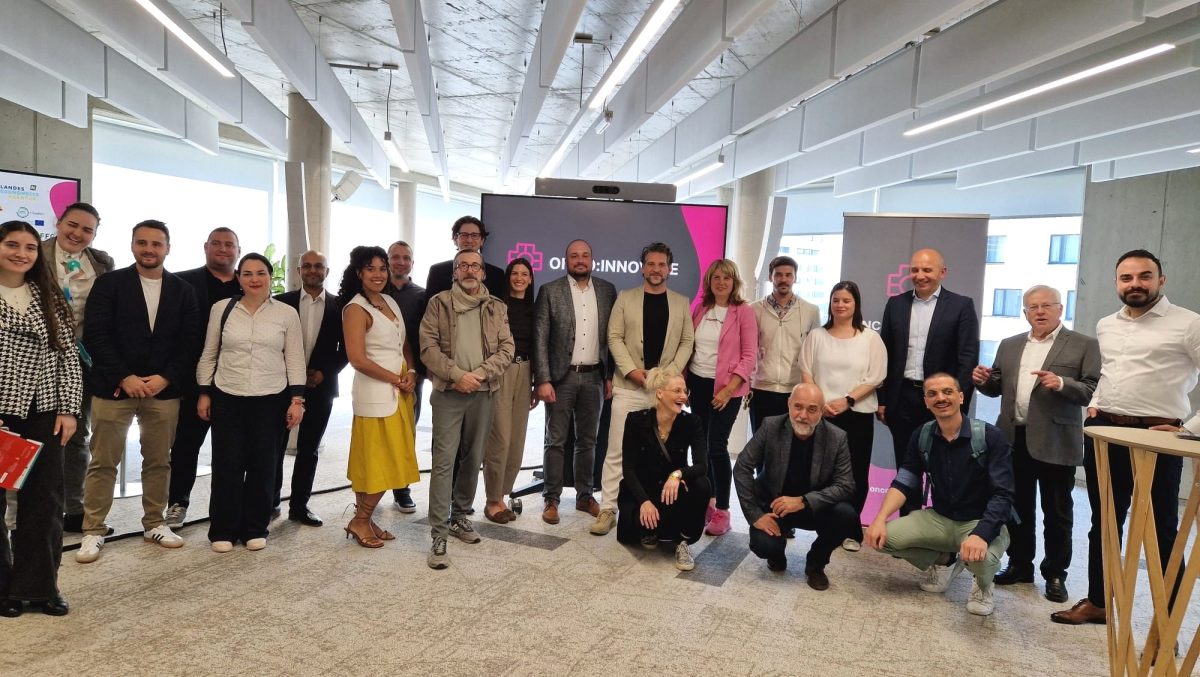
On May 14th, 2025, the heart of Vienna became a hub for the future of cancer care. Onco:Innovate 2025 brought together entrepreneurs, researchers, pharma representatives, medical service providers, EU funding organisations as well AI experts, to explore how innovation is reshaping oncology and life sciences.
Hosted by Kaloyan Ratchev, the day kicked off with a warm welcome and an insightful keynote on market trends and the transformative potential of innovation in oncology. What followed was a dynamic series of talks, panels, and networking opportunities that highlighted the momentum and collaboration across the European healthcare and biotech ecosystem.
Keynote Highlights
The morning keynotes at Onco:Innovate 2025 set the tone for a day centered on both strategic vision and practical implementation in cancer innovation.
- Dr. Ines Haberl of the Austrian Research Promotion Agency FFG opened with a forward-looking keynote on the EU Mission Cancer, providing a comprehensive overview of the EU’s ambitious roadmap to prevent, diagnose, and treat cancer more effectively. From funding priorities to international collaboration, Dr. Haberl emphasized how Europe’s mission-driven research is fostering innovation.
- Marlis M. Müllner, Director of R&D Investment at ABA – Invest in Austria, followed with a spotlight on Austria’s life sciences landscape. With a compelling mix of data and success stories, she highlighted Austria’s emergence as a regional innovation hub, where biotech, medtech, and digital health companies benefit from strong public support and a vibrant research ecosystem.
- Perhaps some of the most grounded and actionable insights came from Mag. Claudia Wunder of the NÖ Landesgesundheitsagentur (Lower Austria Health Agency), who addressed a critical question many innovators face: How does innovation actually make it into hospitals? Drawing from her experience as a lead buyer in Austria’s public health system, she outlined the often complex but navigable procurement, innovation and integration processes. Her talk served as a reality check – and a roadmap – for startups and innovators looking to break into clinical environments.
Together, these keynotes connected the EU perspective, the national perspective and the market perspective, offering attendees a 360° view required to turn breakthrough ideas into real-world impact.
Startup Spotlight: Innovation on the Frontlines of Oncology
A major highlight of Onco:Innovate 2025 was the vibrant showcase of innovators (startups & spinoffs) leading the charge in transforming cancer care. From diagnostics and treatment planning to immunotherapy and post-treatment care, these startups exemplify the bold innovation reshaping oncology. Onco:Innovate 2025 served not only as a showcase of cutting-edge technology but also as a call to action for collaboration across clinical, technological, and entrepreneurial ecosystems.
- Digistain (UK/US) – Dr. Hemmel Amrania presented their revolutionary Cancer Recurrence Risk Assessment solution. Digistain’s approach is faster, more affordable, and seamlessly integrates into existing clinical workflows, enabling clinicians to make informed decisions about adjuvant chemotherapy and personalize patient care.digistain.co.uk
- Nutek MedTech (Austria/Israel) – Dov Cohen introduced the Rainbow Probe, a real-time imaging device using hyperspectral tech and AI to detect residual cancer during surgery, reducing repeat operations. nutekmedtech.com
Moderated by Olivia Blanchard, the afternoon session was expanded the innovation lens further:
- BiomeDx (Austria) – Dr. Nikolaus Gasche showcased BiomeOne®, a stool-based test that predicts response to cancer immunotherapies with over 80% accuracy, enabling more personalized treatments. biome-dx.com
- Docviser (Romania) – Alexandru Lazar presented Docviser, a digital platform that automates treatment planning, integrates virtual tumor boards, and improves collaboration across oncology teams. docviser.io
- Womeno (Bulgaria) – Kalina Milanova introduced Womeno, a digital health platform supporting women through treatment-induced menopause with personalized care and expert guidance. womeno.me
- Verdi Solutions (Austria) – Dr. Sti Forstenlehner presented VERDI’s AI-driven approach to designing individualized peptide vaccines based on tumor genetics and immune profiling. verdisolution.com
- JMMammo (Croatia) – Marko Benkovic of JMMammo AI Diagnostics closed the session with its AI diagnostics platform specifically designed for mammography, aiming to reduce false positives and support early detection.
Onco:Innovate 2025 affirmed that the future of oncology is collaborative, personalized, and powered by innovation and AI. These startups are not just imagining better cancer care – they’re building it.
AI & Cancer: From Competition to Collaboration
One of the most thought-provoking segments of Onco:Innovate 2025 was the chapter on AI & Cancer Care – a deep dive into how artificial intelligence is rapidly changing oncology, not as a siloed solution, but as part of an interconnected healthcare ecosystem.
Before the panel discussion, two standout keynotes laid the groundwork for how data infrastructure and cross-sector partnerships are enabling AI-driven breakthroughs in oncology.
- Peter Gordebeke of the European Federation for Cancer Images (EUCAIM) presented Europe’s Beating Cancer Plan, outlining EUCAIM’s mission to improve cancer care and research through medical imaging and data. The initiative aims to drive innovation in diagnostics, treatment, and clinical decision-making by building an open, interoperable infrastructure that connects imaging resources across Europe. A key focus is on secure, privacy-respecting access to medical data to build trust and support the development and testing of new tools. By making large volumes of imaging data and metadata accessible, Cancer Image Europe supports the goals of the European Health Data Space and advances data-driven healthcare innovation.
- Following that, Dr. Tomislav Smuc, Head of Laboratory at the Ruđer Bošković Institute and a leading figure at AI4Health Croatia, shared key insights from their Breast Cancer AI competition and ongoing efforts within the European Digital Innovation Hub (EDIH). In his keynote, Dr. Smuc highlighted the competition’s structure, the lessons learned, and the results achieved. Organized by AI4Health, the competition served as a practical example of how AI can contribute to healthcare innovation and foster collaborative research.
Together, these talks showed that innovation is not just about building algorithms – it’s about building ecosystems. From federated data platforms to collaborative R&D models, Europe is setting a precedent for how public-private partnerships can drive lasting impact in oncology.
The following panel was moderated by Alejandro Huenich. Addressing the “Rise of AI” as a market trend in the health and biotech sector, Onco:Innovate provided a panel with high level experts in the field of AI.
- Lorena Baric, Director at CroAI Association, showcased impactful use cases of AI in biotech, life sciences, and oncology, demonstrating how intelligent systems are accelerating research, improving diagnostics, and supporting personalized medicine. She emphasized the crucial role of pan-European AI associations, particularly the European AI Forum, in serving as a collaborative hub for national AI associations across Europe. Baric concluded her talk by addressing the critical issues of data privacy, ethics, and security, underscoring the need for responsible data governance in the development and deployment of AI technologies.
- Mario Ravic, Head of IoT & Digital Health at Ericsson Nikola Tesla, discussed the company’s impressive track record in Croatia, highlighting their extensive experience in handling national health data at a high level. He also showcased their involvement in various projects and consortia that drive innovation in the sector. Ravic then delved into the emerging concept of Agentic AI in healthcare, exploring its potential to enhance decision-making, optimize treatments, and improve patient outcomes. He wrapped up his presentation by passing the discussion to the next speaker to further explore this exciting development.
- Hikmet Beyoglu, Engineering Manager AI/ML at PwC, brought a forward-looking perspective to the panel by exploring the emerging role of Agentic AI in cell biology and laboratory automation. He began by defining AI and agentic AI, distinguishing between traditional AI systems – designed to perform specific tasks based on pre-set parameters- and agentic AI, which operates with a degree of autonomy, decision-making, and adaptability in dynamic environments. Beyoglu outlined several stages where agentic AI could significantly enhance efficiency and reproducibility. He positioned agentic AI as a transformative force capable of elevating lab automation from rule-based execution to context-aware, decision-making systems – particularly valuable in complex, high-throughput biological research environments.
How does oncology innovation make its way into hospitals?
The first panel after the lunch break was named Cancer Innovation in Hospitals & Medical Centers and the panelists delved deeper into the keynote topic of Mag. Claudia Wunder, who presented the perspective of a lead buyer at a hospital network.
- Dr. med. Ino Protrka, Director of the DZZ Health Center Zagreb – Centar, presented the latest developments in artificial intelligence (AI) from the perspective of a national hospital. As the largest primary health center in the Republic of Croatia, DZZ – Zagreb Health Center – Centar plays a key role in implementing innovative approaches. Dr. Protrka outlined the hospital’s strategy for innovation, its collaborations with startups, and its involvement in the AI4Health project. Drawing on his experience as a family medicine physician, he also addressed the growing number of patients and emphasized the urgent need for innovative solutions to support medical professionals in their daily work.
- Mag. Erna Ribnicsek, National Market Access Manager at Daiichi Sankyo Austria, offered the perspective of a global pharmaceutical company. She shared insights into market access strategies, current challenges facing medical innovators in Central Europe, and the regulatory landscape that shapes innovation in the region.
The panelists agreed that AI will play a transformative role in the future of cancer care and the broader biotech field. However, they emphasized that its development and implementation must be collaborative, transparent, and centered on patient needs. With the exponential growth of medical data, cross-border and cross-sector partnerships which become more and more essential.
Scaling Up: Supporting the Future of Oncology Innovation
The conference concluded on a high note with a dynamic panel discussion focused on one of the biggest challenges in cancer care: scaling innovation from lab to market, and ultimately, to patients.
Moderated by Kaloyan Ratchev, the session brought together a powerhouse lineup of investors and ecosystem builders:
- Melanie Hartl, Entrepreneurship Lead at EIT Health Austria, highlighted the importance of structured support throughout the startup journey, especially in the health and oncology sectors. She introduced the EIT Health Catapult program, showcasing its significant impact with results and testimonials from the oncology sector. Notably, she shared insights from Onco Innovate participants Digistain and BiomeDX, who have benefitted from the program. Hartl also discussed the key challenges health and oncology startups face when scaling, offering valuable learnings and best practices for navigating these obstacles and ensuring sustainable growth.
- Alejandro Huenich, Head of EU at Decoto International and a valued partner of Onco:Innovate, shared his expertise on the Decoto approach to partnership building. He provided valuable insights into scaling globally, with a focus on regions like India, the Middle East, the US, and Mexico. Huenich emphasized the critical importance of cross-border collaboration, particularly in overcoming the challenges posed by fragmented regulatory landscapes and tapping into the diverse markets around the world. His talk underscored the need for strategic partnerships to navigate these complexities and expand globally.
The panelists agreed that funding alone isn’t enough -successful scaling in oncology requires alignment between investors, innovators, healthcare systems, and regulators. Interoperability, data infrastructure, and evidence-based impact were repeatedly cited as foundational to long-term success.
This closing session was not only informative, but also energizing – sending attendees off with actionable insights and a clear message: the future of oncology innovation in Europe lies in collaboration, scale, and shared ambition.
Closing & Networking
The day concluded with closing remarks from organizer Kaloyan Ratchev, followed by drinks and high-energy networking at the sunny ViennaUp Homebase, where conversations continued into the evening.
A huge thank you to all speakers, partners, and attendees for making Onco:Innovate 2025 a vibrant, action-driven event. The ideas, connections, and collaborations sparked here will continue to shape the future of oncology and life sciences across Europe and beyond.
Stay tuned for our next events and activities.