Onco:Innovate Europe Conference Returns to ViennaUP 2026
06/03/2026
Reflecting on 5 Years of the EU Cancer Mission
02/10/2026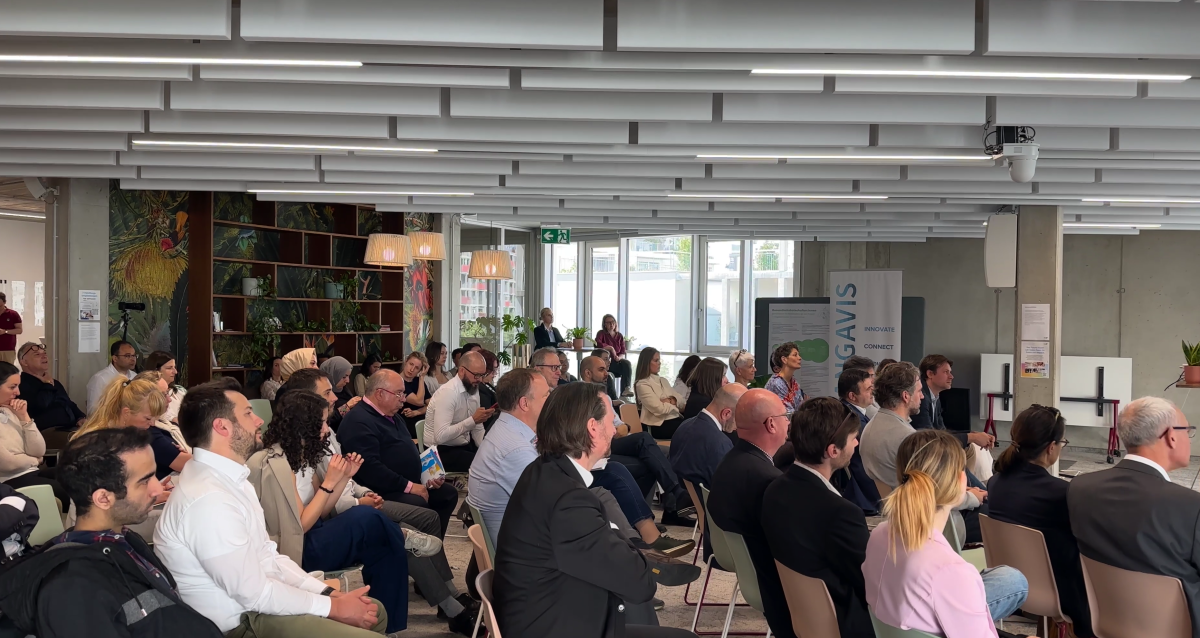
21 May 2026 | Vienna, Austria
On 21 May 2026, leaders from across Europe’s oncology, life sciences and healthcare ecosystems gathered in Vienna for the inaugural Onco:Innovate Europe Conference 2026.
Hosted by the Onco:Innovate initiative and organised by Kaloyan Ratchev with support of the Vangavis team, the conference brought together policymakers, founders, clinicians, researchers, pharma companies, technology transfer experts, investors, and patient representatives to address one central question. The fully booked event featured an outstanding lineup of speakers and participants from around the world.
The program was intense, the discussions highly engaging, and the networking opportunities incredibly valuable. Numerous new collaborations, partnerships, and conversations emerged during the event and are expected to continue well beyond Vienna.
It was also a great honor for the Conference to be among the flagship events of ViennaUP 2026. Special thanks go to the entire ViennaUP team for their support, collaboration, and for creating an exceptional platform.
Why Oncology Needs a New Ecosystem Approach
The conference opened with welcome remarks from Kaloyan Ratchev, Founder & Organiser of Onco:Innovate, who highlighted the growing need for a new collaborative model in oncology innovation. Rather than operating in fragmented silos, Europe’s future success in cancer innovation will depend on stronger integration between healthcare systems, startups, regulators, investors, academia, and patient organisations.
The message set the tone for a day focused not only on innovation itself, but on enabling the systems and partnerships required to bring innovation to patients faster.
Understanding Europe’s Oncology Landscape
The first sessions explored the broader European oncology environment and the policy frameworks shaping the future of cancer care.
- Monika Hackl, Head of the Austrian National Cancer Registry at Statistics Austria, presented important insights into cancer incidence trends and projections across Europe.
- DI Dr. Günter Waxenecker, Head of the Austrian Medicines and Medical Devices Agency (AGES), discussed emerging Austrian and EU legislation as well as strategic initiatives influencing the healthcare and oncology sectors, emphasizing the increasing importance of regulatory readiness in innovation development.
- Adding an important industry perspective, Florian Heffeter, CEO of QMD Services, addressed how medical device regulations — often perceived as obstacles — can instead serve as frameworks for achieving higher quality standards and patient safety.
Financing Innovation and Building National Strategies
A major theme throughout the conference was the importance of alignment between funding, infrastructure, and long-term strategy.
- Zvonimir Ratkovski from the European Investment Fund (EIF) explored how Europe can finance life sciences innovation at scale and support the growth of globally competitive oncology ventures.
- Representing the Ministry of Health of the Republic of Türkiye, Neslihan Öztürk presented how national data infrastructures and AI-driven systems can create a broader impact in oncology innovation.
- Patient-centered transformation was another key focus. Anita Kienesberger, Chairwoman of the Alliance of Oncology Patient Organizations and Board Member of WeCan, highlighted the importance of involving patients not only as beneficiaries, but as active co-creators of future healthcare systems.
- Meanwhile, Ivaylo Petrov from the Bulgarian Joint Cancer Network emphasized the need for stronger European coordination and ecosystem synergy to avoid fragmentation and duplication across initiatives. As a good practice he presented the ECHoS Cancer Mission Hubs network.
From Science to Therapy: Accelerating Translation
The second part of the conference focused on one of the most critical challenges in oncology: translating scientific discovery into real-world therapies.
- Petko Iliev of Clinovate and Future:Trials discussed the transformation of clinical trials in Europe and the need for smarter, more adaptive development models that accelerate patient access to innovation.
- This was complemented by insights from Dr. MMag. Agnes Bugajska-Schretter from the Medical University of Vienna, who presented developments around clinical trial innovation and the new Clinical Trials Center (CTM) at AKH Wien.
- Innovation acceleration continued with presentations from Bernhard Nußbaumer of ACMIT Ventures and Dr. Sébastien Groyer of Vacuum Cancer, who explored pathways for rapidly transforming ideas into medical products and improving treatment response through novel approaches targeting the tumor microenvironment.
- The commercialization journey was further examined by Dr. Amra Ibric from PwC and Anna Orlova, PhD, CEO and Co-Founder of RIANA Therapeutics, who shared perspectives on bridging science, capital, and entrepreneurial execution in oncology drug development.
Technology Transfer and Translational Innovation
The afternoon sessions focused heavily on enabling translational ecosystems and strengthening pathways from research institutions to market-ready solutions.
- Ermes Mestroni, Technology Transfer Office Manager at Centro di Riferimento Oncologico (CRO Aviano), discussed practical oncology innovation pathways from the perspective of an oncological research hospital.
- Balázs Czibok from the University of Pécs highlighted translational approaches in anti-tumor agent development from the perspective of a university TTO, while Bence Kiss, CTO of Neo-Antigen Biotechnology, presented advancements in anti-tumor vaccine pipelines.
Together, these sessions reinforced the importance of cross-functional collaboration between researchers, clinicians, startups, and commercialization experts.
AI & Data: Transforming the Future of Oncology
One of the most dynamic parts of the conference centered on the rapidly growing role of artificial intelligence and data systems in oncology.
- Çağatay M. Çulcuoğlu, Co-Founder and CTO/COO of Massive Bio, demonstrated how AI-powered systems are improving patient navigation, precision oncology, and clinical trial matching.
- Tamas Török from Turbine AI explored the virtualization of biological experiments through AI-driven simulation models, opening new possibilities for drug discovery and therapeutic development.
- Finally, Anna Tidstam, Founder of Ai:leen Health, examined how AI technologies can accelerate therapy adoption and support broader healthcare system efficiency.
Across all discussions, one clear message emerged:
AI alone is not the solution — but there are multiple opportunities to apply AI across healthcare, research, and clinical workflows to accelerate oncology innovation. One of the key foundations for making these applications effective is the availability of well-structured, high-quality data and responsible access to it.
Financing the Future of Oncology
The final sessions focused on investment, scaling, and building sustainable oncology innovation ecosystems.
- Marios Nicolettis from Moondust Ventures shared perspectives on financing MedTech and Biotech growth across Central and Eastern Europe.
- Prudence Donovan, Venture Partner at XISTA, discussed the growing importance of science investment and the evolving relationship between technology transfer and venture capital.
Together with the contributions from the European Investment Fund, these discussions highlighted a crucial reality: Europe possesses world-class scientific talent — but scaling innovation requires stronger access to capital, better commercialization pathways, and more coordinated ecosystem support.
Participants emphasized that the future of oncology innovation will depend on stronger cross-border collaboration, patient inclusion, smarter regulation, scalable funding mechanisms, and the ability to connect fragmented stakeholders into unified ecosystems.
Looking Ahead
Onco:Innovate Europe Conference 2026 demonstrated that Europe already has many of the necessary ingredients for transformative progress in oncology: scientific excellence, entrepreneurial talent, advancing AI capabilities, committed public institutions, and growing investment interest. The challenge now is coordination, execution, and sustained collaboration.
Onco:Innovate continues to grow and to connect innovators, healthcare leaders, investors, corporates, policymakers, researchers, and patient advocates across Europe and beyond.
A big thank you to all speakers, partners, participants, and supporters who contributed to making the inaugural Onco:Innovate Europe Conference such a meaningful and forward-looking event. Special thanks to Nen Nenchev, Martin Shiderov and Petko Iliev.
We look forward to continuing the conversation — and building the future of oncology innovation together.